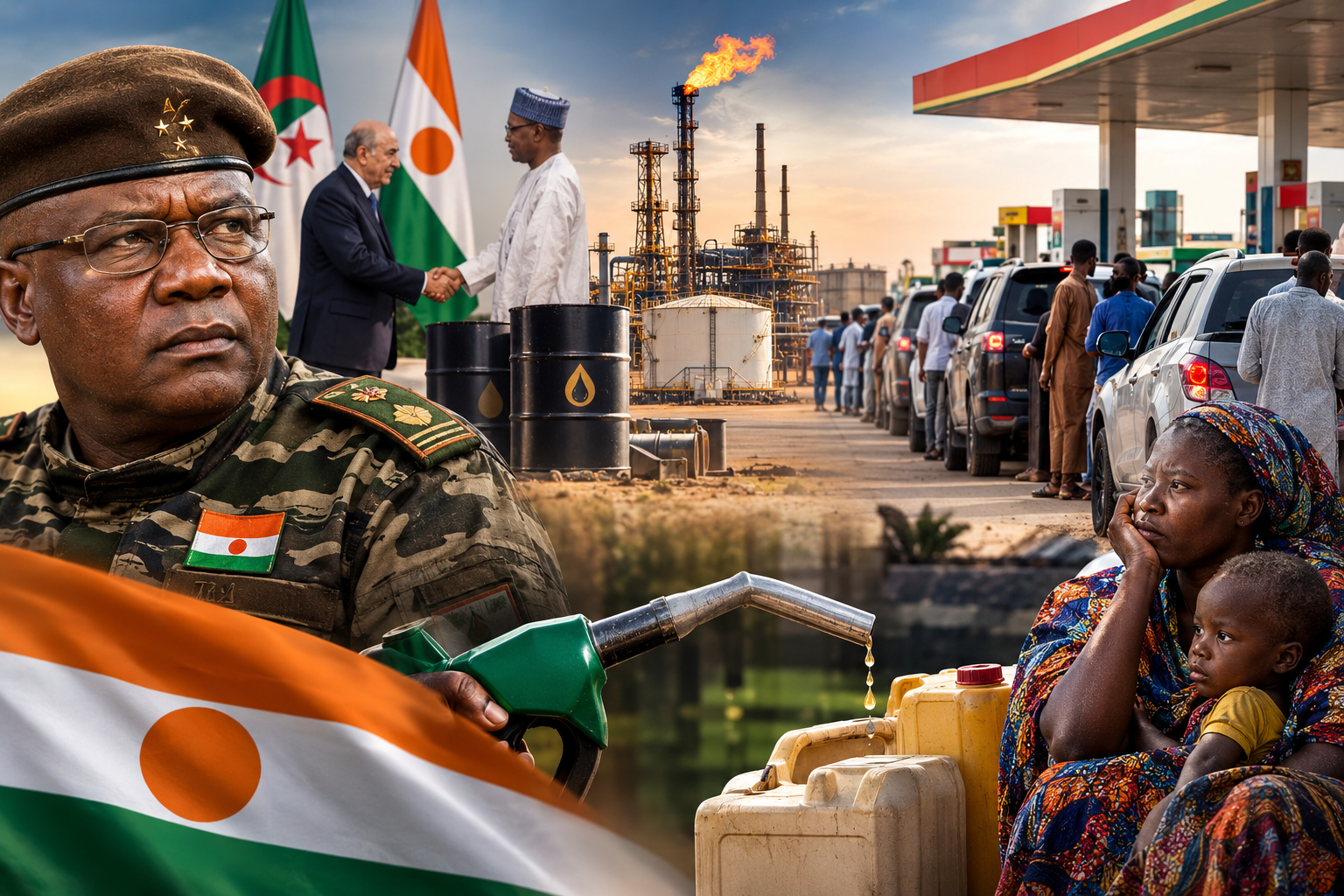
The recent security agreement between Niamey and Algiers has triggered intense public scrutiny rather than widespread celebration, as citizens grapple with severe domestic fuel shortages. Across the country, a fierce debate has erupted regarding the true meaning of national sovereignty when an oil-producing state cannot keep its own gas stations supplied, raising critical questions about what comes next for the nation’s energy strategy and social contract.
Daily fallout and the reality on the ground
The paradox of a nation extracting crude oil while enduring crippling domestic deficits is no longer just an administrative issue; it has become a flashpoint for public frustration. Motorists face endless queues at petrol stations, transport networks are severely disrupted, and local commerce is grinding to a halt. When the supply chain fractures, the burden falls entirely on everyday commuters, logistics operators, and small business owners who are left to navigate the economic fallout.
Scrutinizing the supply chain and export volumes
At the heart of the public debate is a demand for accountability regarding the national hydrocarbon wealth. Citizens and industry observers are pressing the government for precise data on the destination of extracted crude. How much is allocated for local consumption, and what quantities are being exported under current contracts? Furthermore, there is growing skepticism about whether the existing refining, storage, and distribution infrastructure is genuinely capable of meeting internal demand, prompting calls for a comprehensive audit of the entire petroleum value chain.
Geopolitical alliances versus domestic expectations
This domestic crisis is unfolding alongside a broader realignment of foreign partnerships, which has only deepened public skepticism. The expanding footprint of Russia across the Sahel, coupled with the new security framework established with Algeria, has led many to question the tangible benefits of these geopolitical maneuvers. While regional defense cooperation addresses legitimate security threats, the prevailing public sentiment is that military pacts cannot substitute for sound energy governance or fill empty fuel tanks.
The path forward demands total transparency
Looking ahead, the ultimate measure of sovereignty will not be the volume of international treaties signed, but the state’s ability to convert subterranean wealth into tangible improvements for its people. To quell the rising discontent, authorities in Niamey must dismantle the opacity surrounding the oil sector. They are now under immense pressure to clarify the responsibilities behind the supply bottlenecks, prove that strategic decisions prioritize the national interest, and guarantee affordable, consistent access to fuel. Until these fundamental domestic needs are met, the public will continue to ask who truly benefits from the country’s natural resources.